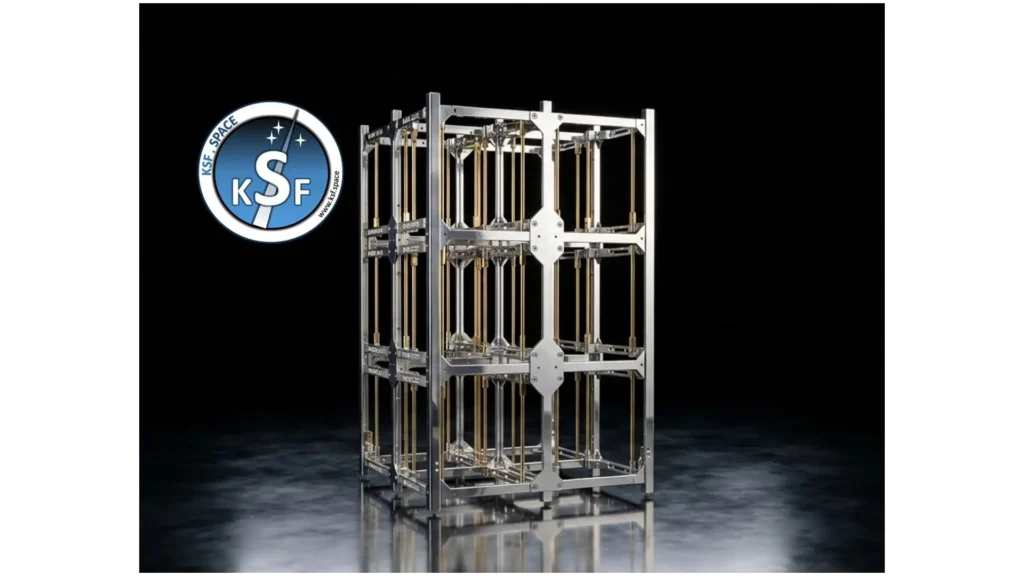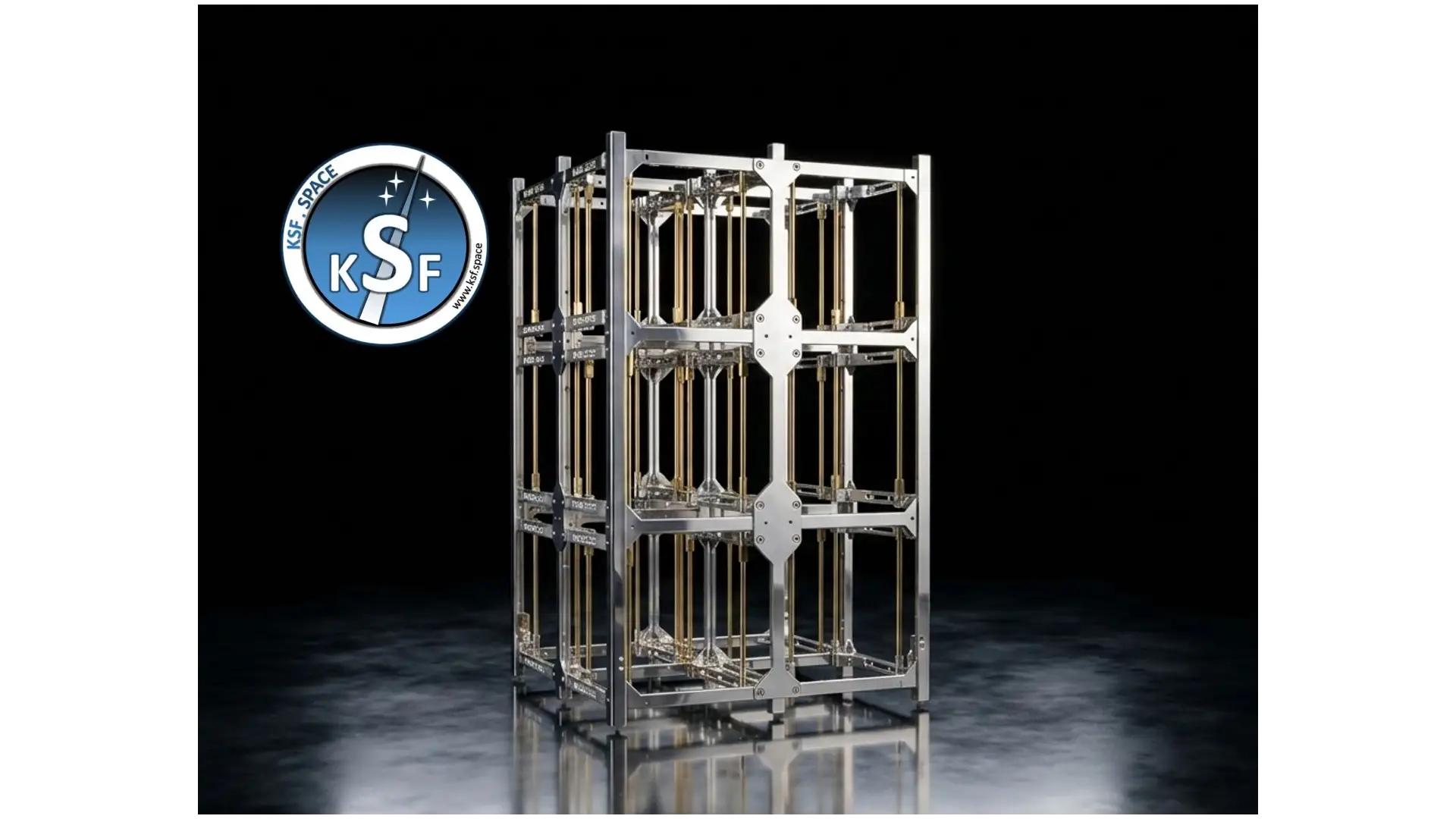
The democratization of the space industry has transformed how universities, researchers, and commercial startups approach orbital deployment. In the era of NewSpace, the reliance on massive, multi-million-dollar satellites has shifted toward modular, scalable, and highly cost-effective small satellites. At the forefront of this architectural shift is the demand for heavy-duty, high-capacity platforms capable of housing complex payloads without exhausting institutional budgets.
If you are planning a high-stakes orbital mission requiring deep volume, robust structural integrity, and proven flight heritage, look no further than the 12u cubesat frame chassis structure engineered by KSF Space.
Operating as a globally recognized US-registered non-profit organization, KSF Space has completely disrupted the aerospace hardware market. By eliminating the aggressive profit margins typical of commercial aerospace vendors, KSF Space delivers the world’s most affordable, high-performance 12u cubesat frame chassis structure—clean-room verified, precision-machined, and completely ready for your space mission.
Understanding the 12U CubeSat Frame Chassis Structure Architecture
A CubeSat’s primary skeleton is its single most vital component during launch and orbital insertion. It is the protective shield that safeguards your valuable payload from extreme physical stress.
What is a 12U CubeSat Frame Chassis Structure?
The CubeSat standard is built on a modular “U” or Unit system, where a single 1u unit represents a $10 \times 10 \times 10\text{ cm}$ cube. As mission profiles have grown to include advanced propulsion systems, high-resolution Earth observation cameras, and complex communication arrays, smaller form factors like the 2u, 3u, and even standard 6U frames often fall short on internal volume.
A 12u cubesat frame chassis structure scales this standard to a substantial 12-unit volume, typically arranged in a rigid, highly stable $2 \times 2 \times 3$ or $1 \times 2 \times 6$ form factor. This provides the necessary volume to bridge the gap between simple nanosatellites and larger microsatellites, giving engineers ample space for deep-space communication modules, large battery banks, and dedicated mechanical deployers.
The Anatomy of an Aerospace-Grade Chassis and Frame
Every cubesat frame manufactured by KSF Space is a masterpiece of precision engineering. The chassis is crafted utilizing advanced manufacturing methodologies, transitioning between precision CNC-machining and state-of-the-art Laser Melted Aluminum technology ($AlSi10Mg$).
The structural Frame features integrated, hard-anodized rails. Hard-anodization is an absolute mandate by launch providers; it ensures that the external rails of the satellite do not undergo “cold welding” or friction-locking against the inside walls of the deployer during months of storage on the launchpad.
Why Choose the KSF Space 12U CubeSat Frame Chassis Structure?
Selecting a cubesat structure is a decision that dictates your entire mission’s success. KSF Space designs its multi-unit frames to address the three core pain points of modern space missions: cost, compliance, and customizability.
1. Unmatched Mass Efficiency and Rigidity
The 12u cubesat frame chassis structure balances minimal structural dead-weight with maximum physical durability. By utilizing specialized lattice geometries and pocketed wall profiles, KSF Space reduces the parasitic weight of the frame itself, leaving more of your mass budget available for fuel, scientific sensors, and high-gain antennas.
2. Complete NASA GEVS Compliance
Every nanosatellite structure frame engineered by KSF Space is built with strict adherence to the NASA-GSFC-STD-7000 (General Environmental Verification Standard) framework. This ensures that the chassis satisfies:
- Structural Safety Factors: Designed with a minimum 1.4 Factor of Safety for ultimate structural loads.
- Vibration Resilience: Validated to easily survive the violent acoustic environments and $10\text{G}+$ random vibration profiles experienced during a rocket launch.
- Vacuum Stability: Outgassing metrics are strictly managed. Materials used maintain a Total Mass Loss ($\text{TML}$) well below $1.0\%$, ensuring zero outgassing that could coat sensitive camera optics or solar cells.
3. A Plug-and-Play Customize Structure System
No two orbital missions are identical. Whether you are flying a scientific payload for an educational institution or deploying an IoT constellation for a commercial startup, you will need custom cutouts. KSF Space offers an entirely adaptable customize structure workflow. Engineers can provide their own CAD files to create precise apertures for sensor windows, camera lenses, star trackers, and deployable solar panel cabling, without compromising the core structural integrity of the Frame.
The Full KSF Space Fleet: From 1U up to 24U Configurations
While the 12u cubesat frame chassis structure serves as an ideal intermediate powerhouse for complex missions, KSF Space provides a fully scalable ecosystem of frames designed to suit every level of orbital ambition.
| Structure Size | Primary Target Audience & Use Case | Common Material Selection |
| 1u Frame | Educational labs, high-altitude balloon testing, basic sensor validation. | PA11 Polymer / Aluminum |
| 2 Unit Frame | Intermediate university teams, mid-tier power testing, basic biology payloads. | Aerospace Aluminum |
| 3u Structure | Commercial IoT pilot constellations, standard Earth observation profiles. | Shot-Peened Aluminum |
| 6U Structure | Advanced ADCS testing, dedicated sub-orbital propulsion payloads. | CNC Machined Aluminum |
| 12 Unit Chassis | Heavy-duty commercial missions, deep-space communication, complex imagery. | Laser-Melted Aluminum |
| 16 Unit Frame | Deep-space tracking, radar cross-section payloads, high-power setups. | Laser-Melted Aluminum |
| 24u Structure | Large-scale technology demonstrations, military tactical defense arrays. | Custom Modular Alloys |
This comprehensive modularity allows engineering teams to baseline their designs on the exact same manufacturing standards, smoothly transitioning prototypes from a simple 1u or 3u configuration up to a massive 12 or 24u bus as mission scope expands.
Flight References and Heritage: Proven Performance in Orbit
In the aerospace domain, theoretical perfection means nothing without flight heritage. The most hazardous component on a space mission is unproven hardware. When you opt for a 12u cubesat frame chassis structure from KSF Space, you are deploying hardware that has already been tested where it matters most: the vacuum of space.
Suborbital and Near-Space Testing Pedigree
KSF Space structures have a long history of enduring brutal environmental testing. These frames have undergone rigorous qualification flights via high-altitude stratospheric balloons and sub-orbital rockets. These environments subject the nanosatellite structure frame to extreme pressure changes, acoustic shocks, and sudden thermal gradients ranging from $-40^\circ\text{C}$ up to $+85^\circ\text{C}$.
Launch Vehicle Compatibility
The flight references of KSF Space extend across the world’s premier commercial and institutional launch providers. Because the 12u cubesat frame chassis structure conforms completely to the standardized universal CubeSat Design Specification (CDS), it is fully certified for integration into standard rail-based and containerized deployers used by:
- SpaceX (Falcon 9 Transporter rideshare missions)
- Rocket Lab (Electron launcher)
- ISRO (PSLV deployments)
- Arianespace platforms
This extensive compatibility eliminates any regulatory hurdles or deployment integration bottlenecks with your selected launch service provider, ensuring a smooth path from the clean-room straight to the launchpad.
Step-by-Step Technical Integration: Ready for Your Space Mission
The “ready for your space mission” philosophy implemented by KSF Space means that your 12u cubesat frame chassis structure arrives ready for immediate integration. The assembly and population process is straightforward, optimized for rapid turnaround.
Step 1: Payload and PCB Stack Preparation
The internal volume of the chassis features full PC104 compliance. This means your On-Board Computer (OBC), Electrical Power Systems (EPS), and attitude control boards (ADCS) can be stacked securely on standard threaded rods, distributing mechanical loads evenly across the structure.
Step 2: Custom Cutouts and Harnessing
Utilizing the KSF Space customize structure service, your side panels will arrive pre-milled with structural cutouts for solar panel headers, umbilical cords, and deployment switches (kill switches). Route your internal wiring harnesses through the integrated cable-management channels to avoid any wire pinching.
Step 3: Environmental Verification and Testing (V&V)
Once your internal components are integrated within the cubesat structure, the complete assembly should undergo standard environmental testing:
- Thermal Vacuum (TVAC): Simulates the extreme thermal cycling of Low Earth Orbit (LEO) while checking for any unexpected outgassing.
- Vibration Table Testing: Subjects the integrated Frame to sine and random vibration cycles to guarantee no screws or components back out during launch.
- Mass and Center of Gravity Verification: Confirms that the fully loaded 12U satellite meets the exact dispenser constraints required by your launch provider.
Frequently Asked Questions (FAQ)
What makes the KSF Space 12U cubesat frame chassis structure the most affordable option globally?
As a US-registered non-profit organization, KSF Space focuses entirely on the democratization of space access. All revenue is directly reinvested into manufacturing optimization, material science research, and educational outreach. This allows KSF Space to offer aerospace-grade aluminum and polymer structures at a fraction of the cost charged by traditional commercial, for-profit aerospace vendors.
Can the 12U chassis handle specialized propulsion systems?
Yes. The 12u cubesat frame chassis structure provides an exceptionally rigid internal environment that is ideal for cold-gas, chemical, or electric propulsion modules (such as Hall-effect thrusters). The structural aluminum acts as an effective heat sink, helping dissipate the concentrated thermal energy generated by propulsion firings in a vacuum.
What standard surface finishes are available for flight models?
KSF Space offers a few distinct finish options. For rapid prototyping and terrestrial fit-checks, a Grey Raw finish is available. For actual flight models, a specialized Black Smooth (Vapor-Honed) or hard-anodized finish is utilized. This precise finish enhances the thermal emissivity of the satellite, ensures compliance with strict low-outgassing requirements, and eliminates any risk of cold-welding inside the deployer.
Does KSF Space offer modular extensions or custom sizing?
Absolutely. Beyond the standard sizes like 1u, 2, 3u, 6U, 12, 16, and 24u, KSF Space provides a comprehensive customize structure service. If your payload requires specialized dimensions, non-standard aspect ratios, or unique mounting brackets, their engineering team can modify the base design to fit your exact operational requirements while retaining launch-safe validation.
How do I initiate a custom order for my mission?
You can easily coordinate with the engineering team by visiting www.ksf.space. From there, you can submit your mission specifications, envelope requirements, and requested panel cutouts to receive an engineered quote tailored directly to your project’s constraints.
References and Technical Resources
- The CubeSat Design Specification (CDS) – The definitive industry standard governing the mechanical development, allowable mass distribution, and rail tolerances for 1U through 12U nanosatellite configurations.
- NASA State of the Art for Small Spacecraft Technology – Annual technological review documentation detailing advancements in cubesat structure design, material evaluations, and deployment mechanism safety standards.
- NASA-GSFC-STD-7000 (GEVS) – General Environmental Verification Standard for Goddard Space Flight Center Flight Programs and Projects, establishing the baseline framework for aerospace vibration, acoustic, and thermal vacuum testing compliance.
- KSF Space Mission Archives – Historic logs, technical blueprints, and engineering data sheets highlighting successful suborbital, near-space, and orbital integrations confirming complete hardware flight heritage. Available at www.ksf.space.